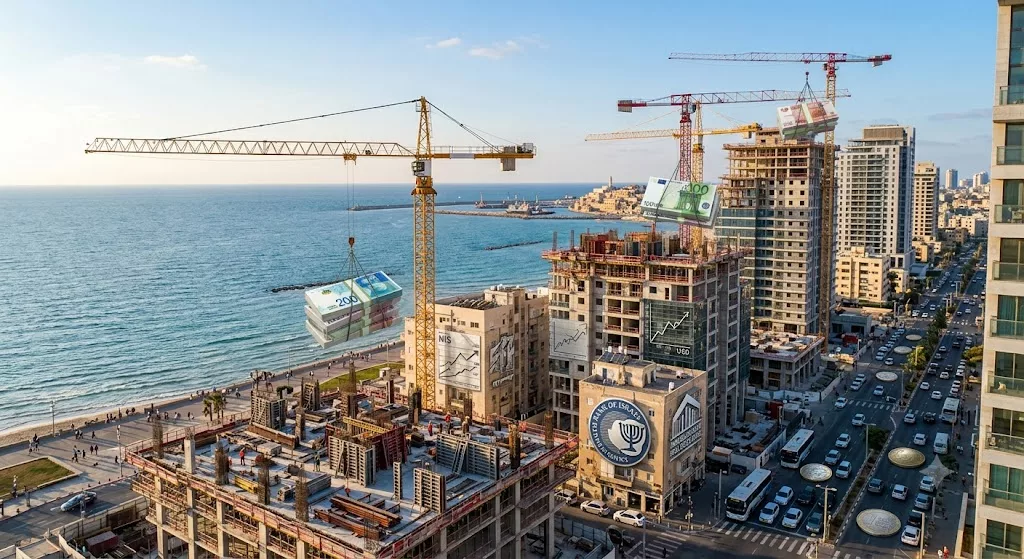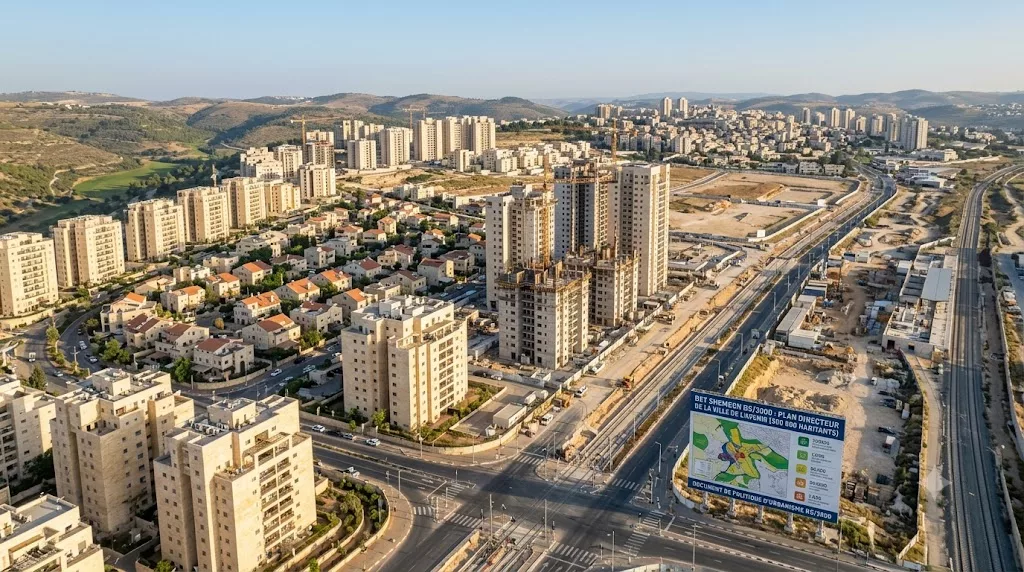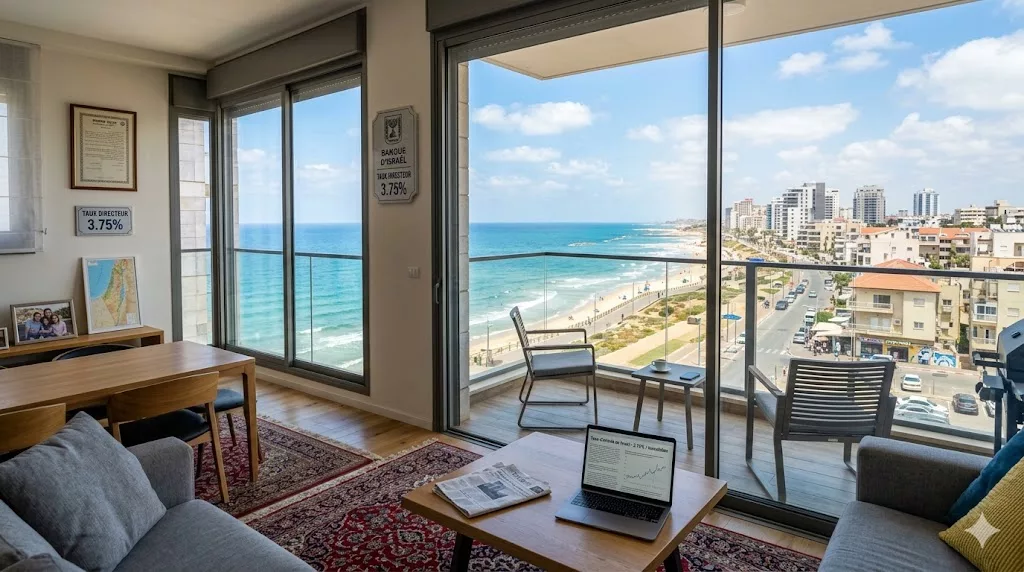

Reforms, taxes, announcement effects, subsidized construction, decline in real estate transactions... Apartment prices in Israel should be falling! And yet, whatever Israeli city you find yourself in, if you are, like many others, simply looking for a 3 to 4-room apartment - in a central neighborhood - in a relatively recent building with elevator, balcony and parking for a reasonable budget, you will notice with disappointment that it's mission impossible! While you see cranes and buildings under construction everywhere in the country! Yes but...
But... When we look at the history and figures, we simply realize that there is a real discrepancy between construction and real estate demand. At the beginning of the State, they built small apartments (2 to 3 rooms) with construction quality very far from current standards, because the goal was to house the maximum number of people at minimum costs, in record time, in what would become the "city centers". Then, between 1970 and 1980, families grew larger and they began building 4-room apartments, or even making more or less legal additions to the initial constructions.
It was only since 1991 that developers launched into the construction of buildings with higher standards including safe room (legislation requires), elevator, parking, etc... And this, especially to make the square meter profitable for 5-room apartments and larger. This is how today apartments with more than 5 rooms represent more than 50% of new apartments, and 3-room apartments less than 10%.Now if we look at real estate transactions completed over the last 18 months, we see that 1 to 2-room properties represent only 6% of acquisitions, 3-room ones 29%, 3.5 to 4-room ones 38%, 4.5 to 5-room ones 24% and those with more than 5 rooms less than 5%!
And since 3 to 4-room properties essentially date from before 1980, they are necessarily in old buildings and therefore have neither safe room, nor elevator, nor terrace, nor parking. Being however the best located, their prices keep climbing! Thus, 3-room apartments represent 40% of real estate acquisitions in Jerusalem, and 48% of real estate acquisitions in Tel-Aviv.
On the other hand, even if 5-room apartments and larger see their prices fall, as they exceed, in large cities, 3,800,000 shekels, the statistics allow simulating a stagnation or slight general decline. So when will there be real in-depth reflection on the housing problem in Israel, and its adequacy to current needs???